
Why Stay Away From The Book of Enoch, an ancient Jewish text shrouded in mystery and controversy, has intrigued scholars and religious thinkers for centuries. Not part of the biblical canon, it sparks debates due to its apocalyptic themes, theological inconsistencies, and speculative nature.
While it offers historical and cultural insights, many Christians approach it cautiously, emphasizing the primacy of canonical texts for theological guidance. By understanding these aspects, readers can form an informed perspective on this enigmatic text and its place in religious discourse.
Understanding the Controversies Surrounding The Book of Enoch
The controversies surrounding the Book of Enoch stem from its exclusion from the biblical canon, theological deviations, and the potential to mislead readers. Early church leaders deemed it non-divinely inspired, raising questions about its authenticity and reliability.
Its teachings often conflict with orthodox Christian doctrines, such as the concept of separate worlds for the righteous and wicked, which diverges from biblical narratives. Additionally, its ambiguous authorship and pseudepigraphical nature add to the skepticism, as scholars believe it was written by multiple authors over centuries rather than by Enoch himself.
Despite its historical significance, the Book of Enoch’s speculative content has been misused by fringe groups to promote unorthodox beliefs, leading to caution among mainstream Christians.
The Historical Background of The Book of Enoch
The Book of Enoch dates back to the Second Temple period, approximately between 300 BCE and 100 CE. It is considered a pseudepigraphical work, attributed to Enoch, the seventh generation from Adam, but widely regarded as having been written by multiple authors over time.
Originally composed in Hebrew or Aramaic, only fragments survived in the Dead Sea Scrolls, with a complete version preserved in Ge’ez, the liturgical language of Ethiopia. Early Jewish and Christian communities debated its value, with some, like the Ethiopian Orthodox Church, accepting it as canonical.
However, most Christian traditions excluded it from the Bible, citing theological and historical inconsistencies. This exclusion reflects the early church’s efforts to establish a unified canon of divinely inspired texts.
Examining the Theological Implications of Enochian Texts
The theological content of the Book of Enoch presents significant challenges to orthodox Christian beliefs. Its portrayal of angelology, apocalyptic visions, and the concept of distinct realms for the righteous and wicked deviates from biblical teachings. For instance, the book’s emphasis on fallen angels and their offspring contrasts with the Bible’s more concise accounts of spiritual beings.
Additionally, its depiction of Enoch’s journey to heaven introduces speculative theology not corroborated by canonical scripture. These theological discrepancies can lead to confusion among readers and create divisions within Christian communities. For these reasons, theologians often recommend focusing on canonical texts that provide a clearer and more consistent framework for understanding Christian doctrine.
Scholarly Criticisms and Debates on The Book of Enoch
Scholars have long debated the historical, theological, and literary significance of the Book of Enoch. Critics highlight its historical inaccuracies, such as the claim that Enoch ascended to heaven in a chariot of fire, conflicting with Genesis 5:24. The book’s pseudepigraphical nature also raises questions about its authorship and authenticity.
Supporters argue for its historical value, emphasizing its influence on early Jewish apocalyptic literature and its references in the New Testament, such as Jude 1:14-15. Despite these merits, the book’s theological inconsistencies and speculative nature have prevented its acceptance as scripture. This ongoing debate underscores the need for careful study and discernment when engaging with Enochian texts.
The Impact of Enochian Writings on Modern Beliefs
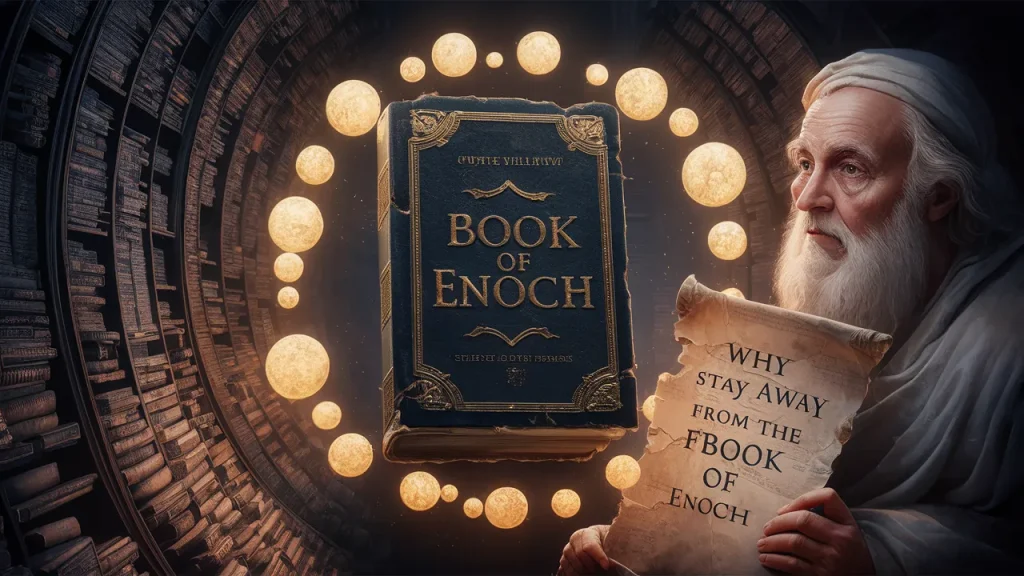
The Book of Enoch continues to influence modern religious and academic discussions, particularly in areas like angelology and apocalyptic literature. Its detailed accounts of fallen angels and the end times have inspired both scholarly research and popular media interpretations.
However, its speculative nature and non-canonical status have led to varied responses within Christian communities. Some view it as a valuable historical resource, while others caution against its potential to mislead. The book’s themes have also been appropriated by fringe groups to support unorthodox beliefs, contributing to its controversial reputation. As a result, its impact on modern beliefs remains both profound and polarizing.
Distinguishing Canonical Texts from Apocryphal Writings
Understanding the distinction between canonical and apocryphal texts is crucial for interpreting the Book of Enoch. Canonical texts are recognized as divinely inspired and authoritative, forming the foundation of Christian doctrine. In contrast, apocryphal writings, like the Book of Enoch, are excluded due to questions about their authenticity, theological consistency, and historical accuracy.
Early church councils played a pivotal role in establishing the biblical canon, prioritizing texts that aligned with apostolic teachings. While apocryphal works can provide historical and cultural insights, they lack the divine endorsement attributed to canonical scriptures. Recognizing this distinction helps Christians prioritize their study and understanding of the Bible.
Common Misinterpretations of Enochian Literature
Misinterpretations of the Book of Enoch often arise from its complex and speculative content. Some readers mistakenly view it as equal in authority to canonical scripture, leading to theological confusion. Its detailed accounts of fallen angels and apocalyptic events are sometimes taken literally, despite their symbolic and literary nature.
Additionally, fringe groups have misused the text to support heretical beliefs, such as alternative creation theories or unorthodox eschatology. These misinterpretations highlight the importance of contextual analysis and guidance from trusted theological sources.
By approaching the Book of Enoch with caution and discernment, readers can avoid misconceptions and focus on sound doctrine.
The Role of The Book of Enoch in Various Religious Traditions
The Book of Enoch holds a unique place in different religious traditions, reflecting its diverse interpretations and significance. In the Ethiopian Orthodox Church, it is considered canonical and studied alongside the Bible.
In contrast, most other Christian denominations view it as apocryphal and advise against using it for doctrinal purposes. Jewish communities recognize its historical value but do not include it in the Tanakh.
The book’s apocalyptic themes and angelology have also influenced Islamic and esoteric traditions. This varied reception underscores its complex role in religious history, shaping beliefs while remaining outside mainstream canons.
Fun Facts About Why Stay Away From The Book Of Enoch
- The Book of Enoch was rediscovered in Ethiopia in the 18th century after being lost to the Western world for centuries.
- It is one of the few ancient texts to describe detailed hierarchies of angels and their interactions with humans.
- The book’s influence can be seen in early Christian writings, including the Epistle of Jude.
- It’s considered one of the earliest apocalyptic texts, predating the Book of Revelation.
- Fragments of the Book of Enoch were found among the Dead Sea Scrolls, highlighting its significance in Second Temple Judaism.
Frequently Asked Questions About Why Stay Away From The Book Of Enoch
Why was the Book of Enoch excluded from the Bible?
The Book of Enoch was excluded due to questions about its authorship, authenticity, and theological consistency with canonical scripture. Early church leaders did not recognize it as divinely inspired.
Is the Book of Enoch considered heretical?
While not officially labeled heretical, its teachings often conflict with orthodox Christian doctrine. This has led many denominations to advise against its use for theological study.
Did any religious groups accept the Book of Enoch as canonical?
Yes, the Ethiopian Orthodox Church includes the Book of Enoch in its canon. However, this is an exception among Christian traditions.
What is the significance of the Book of Enoch in modern scholarship?
It provides valuable insights into early Jewish thought and apocalyptic literature. Scholars study it for its historical and cultural context rather than as inspired scripture.
Can Christians read the Book of Enoch?
Christians can read it for historical or academic purposes but should approach it with discernment. It’s essential to prioritize canonical texts for doctrinal guidance.
Conclusion About Why Stay Away From The Book Of Enoch
The Book of Enoch remains a fascinating yet controversial text in religious and academic circles. While it offers historical insights and influences early apocalyptic literature, its theological inconsistencies and non-canonical status raise concerns among Christians.
The book’s speculative nature and potential to mislead have led many to caution against its use for doctrinal purposes. Understanding its historical background and cultural significance can provide context without compromising faith in the biblical canon. By focusing on inspired scriptures, Christians can build a solid foundation for their beliefs while appreciating the historical value of works like the Book of Enoch.